Description: Discover what homeopathy is, how it works, its potential benefits, risks, scientific evidence, and what to expect during a consultation. An evidence-informed guide for beginners.
Homeopathy has remained one of the most widely discussed complementary healthcare systems for more than two centuries. While some people value its personalized approach and holistic philosophy, others question its effectiveness because of ongoing scientific debate. As a result, it’s common to encounter conflicting opinions about homeopathy online and through word of mouth.
If you’re considering homeopathy, it’s worth understanding both its principles and its limitations before deciding whether it’s right for you. Learning how it differs from conventional medicine can help you make informed choices about your health.
This guide explains what homeopathy is, how it works, why people choose it, what current research says, and the safety considerations you should keep in mind. Rather than promoting or dismissing homeopathy, this article aims to provide balanced, evidence-informed information so you can make decisions that best suit your healthcare needs.
Key Takeaways
Before diving deeper, here are a few important points to remember:
What Is Homeopathy?
Homeopathy is a form of complementary medicine developed in the late eighteenth century by German physician **Dr. Samuel Hahnemann**. Unlike conventional medicine, which generally focuses on diagnosing and treating disease, homeopathy emphasizes understanding the individual as a whole.
During a consultation, a homeopathic practitioner may ask detailed questions about your physical symptoms, emotional well-being, medical history, lifestyle, sleep patterns, diet, stress levels, and other aspects of your overall health. Based on this information, a remedy is selected according to traditional homeopathic principles.
Homeopathic remedies are prepared using a process called **potentization**, which involves repeated dilution combined with vigorous shaking. Many commercially available remedies are diluted to such an extent that little or none of the original substance can be detected. This characteristic is one of the main reasons homeopathy remains controversial within modern scientific research
A Brief History of Homeopathy
Homeopathy was introduced in 1796 after Dr. Samuel Hahnemann became dissatisfied with many of the medical practices commonly used during his time. He proposed an alternative approach based on careful observation of symptoms and individualized treatment.
Over the following decades, homeopathy spread throughout Europe and later expanded to North America, Asia, and other parts of the world. Today, millions of people continue to use homeopathy, although regulations and professional standards differ between countries.
In India, homeopathy is officially recognized as one of the country’s traditional systems of healthcare and is practiced alongside other medical systems.
How Does Homeopathy Work?
Homeopathy is guided by several traditional principles that differ from the concepts used in conventional medicine.
1. . The Principle of "Like Cures Like"
One of the core ideas of homeopathy is that a substance capable of producing symptoms in a healthy person may be selected, in a highly diluted form, for someone experiencing similar symptoms. This principle forms the basis of traditional homeopathic prescribing. However, it has not been confirmed by modern scientific evidence.
2. Individualized Care
Unlike approaches that primarily focus on diagnosing a condition, homeopathy emphasizes understanding the individual.
A practitioner may consider
Because treatment is tailored to the individual, two people with the same diagnosis may receive different homeopathic remedies.
3. Highly Diluted Preparations
Homeopathic remedies undergo repeated dilution and shaking before they are used. According to traditional homeopathic theory, this process is believed to enhance the properties of the remedy. However, many scientists note that these preparations often contain little or none of the original substance, and the proposed mechanisms are not consistent with current scientific understanding of chemistry, biology, or pharmacology.
As a result, homeopathy remains an active area of debate and research.
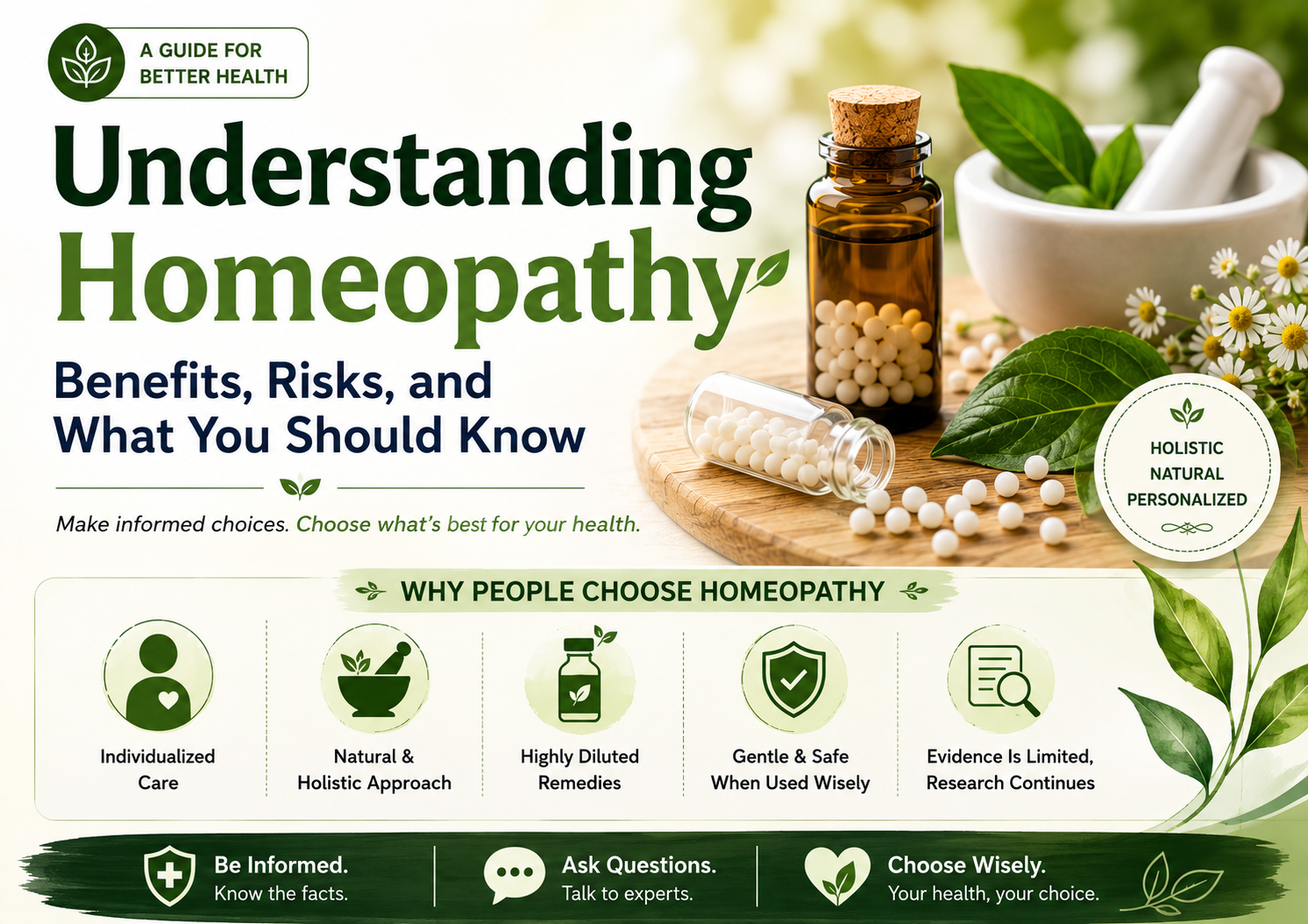
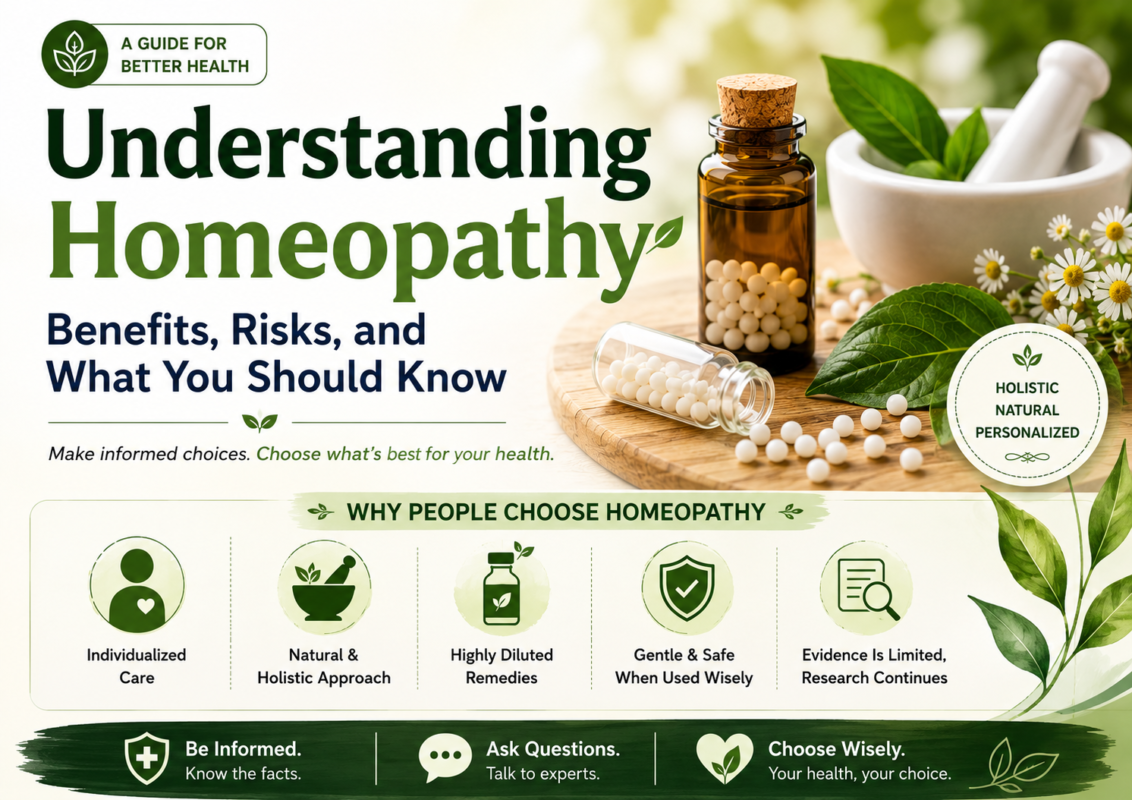
Why Do People Choose Homeopathy?
People choose homeopathy for different reasons, and their motivations often extend beyond the remedies themselves.
Many individuals appreciate the personalized nature of consultations, where practitioners typically spend more time discussing overall health than during a routine medical appointment.
Others are interested in complementary healthcare approaches that focus on the whole person rather than a single condition.
Some of the most common reasons people explore homeopathy include:
For many people, homeopathy is one part of a broader wellness routine that also includes nutritious eating, regular physical activity, stress management, adequate sleep, and other healthy lifestyle practices.
Potential Benefits of Homeopathy
The scientific evidence supporting homeopathy remains limited, but many people report positive personal experiences with homeopathic care. It’s important to recognize that individual experiences are different from conclusions drawn through well-designed clinical research.
Personalized Consultations
One of the most frequently mentioned advantages of homeopathy is the amount of time practitioners spend understanding each patient.
Appointments often involve detailed discussions about symptoms, lifestyle, emotional well-being, and medical history, allowing patients to talk about concerns that may not always be covered during shorter consultations
A Holistic Perspective
Homeopathy encourages practitioners to consider the person as a whole rather than focusing only on a diagnosis.
Some people value this broader perspective because it encourages conversations about daily habits, emotional health, and overall well-being alongside physical symptoms.
Encouragement of Healthy Lifestyle Habits
Homeopathic practitioners may also recommend lifestyle improvements that support general health, including:
These healthy habits can contribute to overall wellness regardless of whether someone uses homeopathic remedies.
Greater Patient Engagement
Many patients appreciate being actively involved in discussions about their healthcare goals. Taking time to understand a person’s concerns can help them feel more engaged in managing their own health.
What Does Scientific Research Say About Homeopathy?
Homeopathy has been studied for decades, yet its effectiveness remains a topic of ongoing discussion within the medical and scientific communities.
Some individual studies have reported positive findings for certain conditions. However, when researchers examine the evidence as a whole through systematic reviews and meta-analyses, many conclude that there is insufficient high-quality evidence to demonstrate that homeopathy performs better than a placebo for most health conditions.
Because of this, many healthcare organizations recommend that homeopathy should be viewed as a complementary approach rather than a replacement for treatments that have established safety and effectiveness through rigorous clinical research.
Understanding this distinction is important. Personal experiences can be meaningful to individuals, but they are not the same as evidence collected through large, well-designed clinical studies.
Risks and Limitations
Like any healthcare approach, homeopathy has limitations that should be considered before starting treatment.
Delaying Necessary Medical Care
One of the biggest concerns is postponing appropriate medical diagnosis or treatment.
Using homeopathy instead of seeking medical care for serious illnesses can allow a condition to progress, potentially making treatment more difficult later.
Always seek immediate medical attention if you experience symptoms such as:
Homeopathy should never replace emergency medical care.
Product Quality Matters
The quality of homeopathic products can vary depending on the manufacturer.
When choosing a product, look for:
Purchasing from trusted manufacturers and reputable retailers helps reduce the risk of counterfeit or improperly manufactured products.
Individual Health Considerations
Certain groups should seek professional medical advice before using homeopathic products, including:
Your healthcare provider can help determine whether a complementary approach is appropriate for your circumstances.
Are Homeopathic Remedies Safe?
Many homeopathic remedies are highly diluted, which generally reduces the likelihood of side effects directly related to the original ingredient.
However, safety depends on more than dilution alone.
Factors that influence safety include:
On rare occasions, products marketed as homeopathic have been found to contain unexpected ingredients or higher-than-expected concentrations because of manufacturing or quality-control issues.
Choosing products from reputable companies and following label instructions can help reduce these risks.
If you experience unexpected symptoms after using any healthcare product, stop using it and consult a qualified healthcare professional.
What Happens During a Homeopathy Consultation?
One aspect of homeopathy that many people appreciate is the detailed consultation process.
An initial appointment often lasts between 45 minutes and 90 minutes, depending on the practitioner and your individual situation.
During the consultation, you may be asked about:
The purpose is to develop a detailed understanding of your overall health rather than focusing only on a single symptom.
If homeopathy becomes part of your healthcare plan, follow-up appointments are usually scheduled to review your progress and discuss any changes in your symptoms or overall well-being.
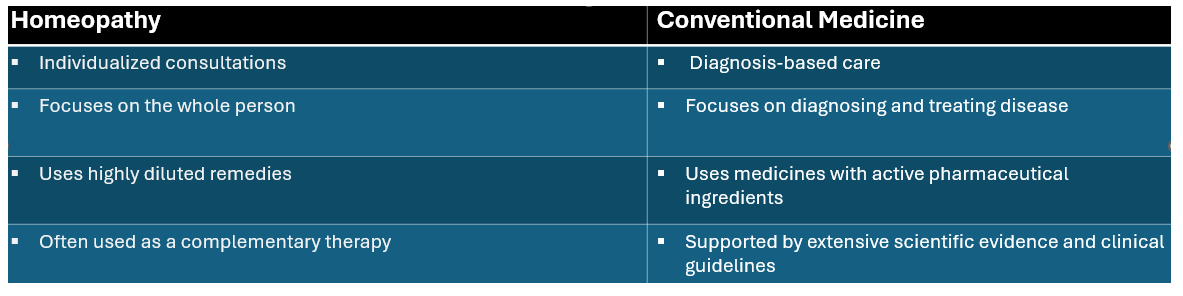
Homeopathy vs. Conventional Medicine
Although both approaches aim to improve health, they differ in philosophy and treatment methods.
Some people choose to combine complementary therapies with conventional healthcare. If you decide to do so, let your healthcare providers know about all the treatments you’re using so they can help ensure your care remains safe and well coordinated
Common Myths About Homeopathy
Because homeopathy has been practiced for generations, several misconceptions continue to circulate.
Buy From Trusted Manufacturers
Choose companies that are transparent about their manufacturing practices and quality standards.
Read Product Labels Carefully
Check that the label includes:
Purchase From Reputable Retailers
Buying from established pharmacies or trusted online retailers can help ensure product authenticity and proper storage.
Follow Directions
Always use products according to the instructions on the label or the advice of a qualified healthcare professional.
Frequently Asked Questions
Tips for Making Informed Healthcare Decisions
Whatever healthcare approach you choose, informed decision-making is one of the most valuable steps you can take.
Here are a few practical recommendations:
Good healthcare decisions are built on accurate information, open communication, and a clear understanding of both the benefits and limitations of different treatment options.
Conclusion
Homeopathy continues to be one of the world’s best-known complementary healthcare systems. Many people appreciate its individualized consultations, holistic philosophy, and emphasis on understanding the person as a whole.
At the same time, current scientific evidence remains limited, and homeopathy should not replace treatments that have been proven safe and effective for serious medical conditions.
If you’re interested in learning more about homeopathy, take the time to understand how it works, choose products from reputable manufacturers, and consult qualified healthcare professionals before making changes to your healthcare routine.
At HomoeoCareX, we believe informed choices lead to better health decisions. That’s why we offer carefully selected homeopathic products from trusted manufacturers, along with educational resources designed to help you better understand complementary healthcare. Explore our collection to find quality products that fit your wellness journey while making decisions based on reliable information.